Showing posts with label Voices for Creative Nonviolence. Show all posts

St. Patrick's Day Witness Against Drones


Reaping the Whirlwind by Steve Clemens

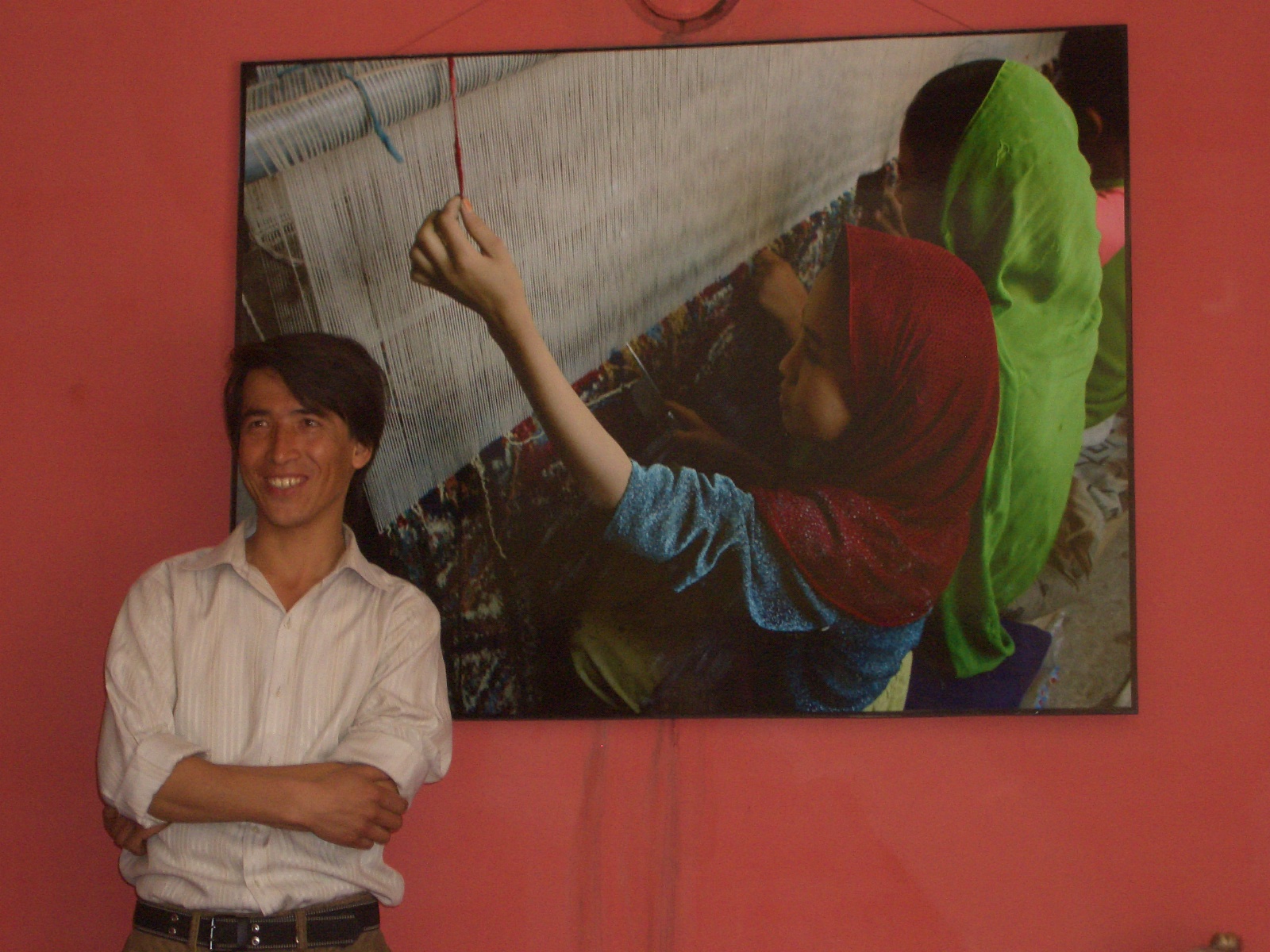
The tears were streaming down my cheeks as I walked towards the shuttered iron gates in front of the Iowa National Guard base in Des Moines. The tears were a combination of reaction to the cold wind in our faces as seven of us walked slowly and deliberately toward the base entrance as well as my emotions remembering the victims at the receiving end of military drones. I carried a large photo of my Afghan friend, Abdulai, with his statement underneath: we wish to live without wars. Now 17, he has only known war or the threats of terror his whole life. When I met him in Kabul in March a few years ago, he showed me pictures of their march in the downtown area of his nation's capital city where they marched by the Embassy for the United Nations wearing the sky blue scarves calling for an end to war.

I brought one of the blue scarves of the Afghan Peace Volunteers back to the US with me and wore it in solidarity with those courageous peacemakers back in the country where the US drones prowl the skies. My friend, Frank Cordaro, sent me an invitation to join the annual Midwest Catholic Worker Faith and Resistance Retreat which would focus on faith-based nonviolent resistance to drones. Veterans For Peace were co-hosts with the Des Moines Catholic Worker and we learned of the plan-in-progress to bring control of Reaper drones to the local National Guard base in their city. The Reaper and Predator are unmanned aerial vehicles (aka drones) which are armed and rain deadly munitions from the skies which are designed for both "extra-judicial execution" and the sowing of terror on intended (and mistaken) targets.

We engaged in nonviolence training on Sunday afternoon before listening to Kathy Kelly from Chicago-based Voices For Creative Nonviolence (www.vcnv.org) who reported on her recent trip to Afghanistan and her work against drones. Overnight I'm sure many of us wrestled with the uncertainties ahead: would we held in the cold jail until the next morning, would we face state or federal charges - the latter threatening fines of $500 as well as 6 months in prison? The stakes could be significant. I promised my wife I would do my utmost to NOT be in jail when my oldest son returns from West Africa this August for his wedding! But also weighing on me are the stakes and risks for those threatened by Hellfire missiles fired from miles overhead - out of sight and accompanied by the distant "hum" of the drone's engine.

People always ask, "Is civil disobedience effective?" Am I tilting at windmills when trying to prevent or discourage our nation's head-long rush into wars ostensibly to prevent terrorism by terrorizing others? Even some of our retired military leaders ( including Stanley McCrystal and former Defense Secretary Robert Gates) recognize that the use of drones which often kill "innocent civilians" serves as a recruiting tool for more "insurgents" - thus reaping the proverbial whirlwind. Before leaving for the peace witness this morning, we gathered at the Catholic Worker House to sing, pray, and gather our thoughts. Ruth, one of my fellow arrestees from the south Minneapolis-based Rye House Community shared with us some writings from Thomas Merton as well as one of my mentors, Dan Berrigan. He wrote that we must act on our conscience and leave the results to God. We heard part of the prayer called the Breastplate of St. Patrick, on this, his feast day, as we piled into car pools for the 15 minute ride to the air base.

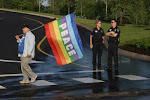
The seven of us arrested as we stood arm-in-arm facing the closed iron gate, one from a new Catholic Worker House in Duluth, one from Rye House in Minneapolis, two from the Des Moines Catholic Worker, a leader of the national Veterans For Peace movement, and a 85-year old retired Methodist minister from Des Moines joined me in receiving a "ban and bar letter" from the military base and a court date of March 25 to enter a plea on the state criminal trespass charges. We were treated courteously and professionally by the arresting officers of Des Moines STAR (Special Tactics and Response) unit as we reminded them of our vow of nonviolence we recited before we walked down the driveway this morning. We informed them our protest was directed at the arrival of the drones-mission [sic] rather than at them as we we placed under arrest on placed in a "paddy wagon" - how fitting for St. Patrick's Day!


Day 7 in a War Zone


The Faces of a New Afghanistan: Day 7 in a war zone by Steve Clemens. March 24, 2011

She is an unveiled, defiant young woman. He is a filmmaker still recovering from his kidnapping 6 ½ years ago. She told me this morning, only half in jest, that she plans on becoming the President. He, at only 15, has known the pain of losing his father but is still willing to stand up to the intimidation of much older adults.

What Zahra, Basir, Shahrbanoo, and Abdulai have in common is a commitment to peace, acts of courage, and, yes, they are all tired – tired of living in a nation of fear, corruption, violence, ethnic animosity and gender discrimination. One turns 30 in a few months, another 20 next week. At 23 and 15, the other two belie their ages with hard-won wisdom. All four took the gutsy step of protest in the streets of Kabul on Thursday, March 17th with 35-40 others, draped in bright turquoise blue scarves and holding banners reading “Today we make a resolute stand for a peaceful tomorrow”, “The citizens of Afghanistan say No to war”, “We wish to live without wars”, and “Warmongers, do not turn our houses into war bastions!”

Some are members of the Afghan Youth Peace Volunteers (AYPV); others belong to organizations that have aligned themselves to the AYPV, despite the enormous distrust many Afghans feel for their fellow citizens. These 4 collaborate together hoping to find ways to encourage each other in what is an admittedly lonely struggle – at least for now. While their elders sit in fear of the return of the Taliban, these young, energetic activists want their nation to move forward, not merely crouching in fear or wallowing in corruption.

Each of the four had 25 committed peacemakers from Germany, Australia, and the US travel with them for a week, listening to them, weeping with them, and smiling and hugging one another; peacemakers from four continents sharing stories and food, lighting candles to remember the victims of war. One of the International Peace Delegates, now in his 80s, had marched in the Deep South of the US in the days of the Cold War – a march from Canada to Cuba – and was there for the birthing of the Civil Rights movement. Two other internationals were so young that they couldn’t remember the first Gulf War in 1991, just a year older than my youngest son.

Abdulai laughs easily but he also carries a deep wound. It was the strength and courage of his older brother, Khamed Jan, who carried his younger brother up the mountains to hide from the Taliban who had killed their father. Like any 15 year-old who experienced such a traumatic loss, Abdulai has moments of anger and times of despair but when he was scolded by adults who told him he is naïve and unrealistic for advocating that negotiations to heal Afghanistan’s ethnic rivalries must also include the Taliban – at least lower-level Talibs – he quickly reminds the adults that he has already had a cup full of pain and wants the cycles of hatred, vengeance, and revenge to end.


Knowing a little of how hard it is for any woman – let alone one who openly defies her extremely patriarchal culture – one of the Americans asks Zahra if she’d consider moving to India, Pakistan, Iran, or even the U.S. to give her some breathing room, a safer space, from which to operate. No, this is my country; I am an Afghan woman was her response. I could see in her sad eyes and drooping shoulders as she let down her natural defenses to tell us how tired she was. We listened, our hearts breaking at her pain – yet strangely celebrating the strength of this young woman at the same time. She had invited many people to join her in the peace march in the street last Thursday who said they’d come but then didn’t answer her calls on the day it was happening.

She is trying to bring change to Afghanistan but says she sees little change - she doesn’t witness good results. She tried politics for a couple of years but was disgusted with the fraud and corruption. People accept them just because of money, she observed. Although she likes some of the ideas of Dr. Barshardost, a Member of Parliament, she is not sure about his strategy. But she still sees it as too much talk and not enough action. “He should do, he should Act. People are tired of speaking, they want to see action. Barshardost hands out money (to the needy) but he should help with real development.”

“I’m tired; I don’t know how I can accept this situation. I want to work for peace but I worry that I am alone. I can’t find more people who have the same idea. When people are hungry, how can I say to them that you should work for peace? When they are jobless, how can I ask them to take a political stand? They can only think about food and work.” Then one of the internationals tells her that the recent uprising in Egypt didn’t happen overnight. It was people just like you working behind the scenes for years – even we didn’t see how fast the change came.

Basir, a photojournalist, told me he awoke from a nightmare a few nights ago, fearing he had a hole blown into the back of his skull, waking up with a premonition that it might be best for him to lay low today. It might be a wise decision since he had a similar dream the night before the Taliban kidnapped him in 2004. Although it has been more than 6 years since that event, he told us he is more concerned about his physical safety in the past year than anytime before. He told us that suicide bombers could strike anywhere. Although his beautiful photographs grace many of the walls at the Open Society office, greeting us every morning with his colorful images, most of his work is at the 3rd Eye Photojournalism Center, the place where we held the candle light vigil for victims of war several days ago.

Basir tells us the story somewhat matter-of-factly, as if keeping his emotions at arm’s length, he won’t have to be re-traumatized. He was traveling with two other photojournalists and he doesn’t give us the details of the kidnapping or how long they were held. The female filmmaker was shot by the Taliban and she remained lying on the ground, the Taliban assuming she was dead. I wasn’t clear on where she was shot but in moving away from her, allowed her to escape and survive. Meanwhile, the Talibs held Basir and the other photographer, hoping to exchange them for prisoners held at Baghram’s prison on the sprawling Air Base. During this ordeal, one of his captors became sick and Basir helped him. This captor was sympathetic to them, telling them what was going on, the hope of the prisoner exchange.

However, it became clear that neither the US or Karzai governments were interested in a prisoner swap and so Basir was told by this man that they were to be killed the next day. The man he helped indicated that he was powerless to release them and was sorry it had come to this. As they were on the move to the area where they were to be executed, the Talibs got word that another group of their comrades had just ambushed and killed “an international [soldier] and an Afghan soldier.” His captors, elated with the news lit a fire, and began dancing and celebrating. With the forewarning about their planned execution, Basir and his friend used the distraction of the celebration to escape.

So when Basir tells us seven years later that “things are much more difficult now”, referring to suicide bombing attacks that can happen “anywhere”, it may be a sign of hyper-vigilance as a result of post-traumatic stress or it can be just a realistic evaluation of the depression and fear engendered after decades of war and senseless violence. Basir and my other three friends have not known any extended periods of peace in their lifetimes – yet they are still willing to embrace us, visitors from the country which has armed both sides of this on-going tragedy.


Shahrbanoo is being mentored as a filmmaker by Basir and also acted in one of his films. She and Zahra “escaped” to Kabul – leaving their very conservative, prescribed-roles, rural homes (without their parents’ knowledge or permission. [Their parents have followed them, moving to Kabul.] Basir serves as an “older brother” in picking them up and riding with them to the office. Never knowing who is watching, and with so many rigidly conservative men ready to pounce on any women brazen or foolish enough to travel unaccompanied by a male family member, having Basir or Asif accompany them is a helpful and prudent thing. I’m drawn by their lively spirits and their ready laughter with us but also know the deep well of pain they carry with them. They obviously draw support from each other.

For their future, for the future of their country, this war must end. They are very clear to us: Get the US troops out as quickly as can as be done responsibly. They don’t want to see the Taliban fill the political and military vacuum that could be created with too quick a withdrawal but the present reality must change. Karzai and his cronies may be hopelessly corrupt – but with courage and insight, these young people are getting ready to lead a new Afghanistan. It is a privilege to have listened to them.

Day 3 in the War Zone: Creating Peace Via Skype

Day 3: Creating Peace Via Skype by Steve Clemens. March 20, 2011

We were told to expect the AYPV boys at our office lodgings at 4:30 AM because the Global Day of Listening was scheduled to begin by 5:30. They arrived a little late because they had been on the phone to others around the world since 10 PM last night. The plan for today was to continue the conversations over Skype connections on the internet. We rented a local internet café for the day but it wasn’t schedued to open until 8 AM so the conversation across the ocean(s) began with just telephone conversations.

Scott Shaeffer-Duffy from a Catholic Worker Community in Massachusetts helped begin the dialog as his wife, son, and daughter all joined in to talk with Hakim and the youth seated around our table in our office /“hotel”. We had a few technical glitches but everyone was engaged despite the long night and the early morning. Different members of the International Peace Delegation were asked to send greetings to their friends at home as part of the listening project. I signed up for 7 AM and actually joined the conversation at 7:30, sending greetings to the peace community in the Twin Cities where it was 10 PM on the day before. The young people asked me to tell them about groups I was part of in Minnesota so I described our weekly Wednesday vigil at Alliant Techsystems (ATK).

The connection is relevant for our friends in Afghanistan since this Minnesota-based war profiteer has made landmines and cluster munitions, two of the scourges of war which continue to plague civilians long after the conflict ended in certain regions of the country. I also mentioned the new weapon used by the US Army in Afghanistan, a combat gun that “shoots around corners”. Hakim asked if this was the XM-25 and I said that was - its new name and it’s “roll-out” was happening now in Afghanistan.

Abdulai asked me about whether I was hopeful about change coming after vigiling for so many years at ATK. This 15 year old boy is wise beyond his years. He had previously said that he feels tired of trying but said we need patience – and, if it doesn’t happen in his lifetime, the struggle is still worth it. I told him I shared his sentiment: if ATK doesn’t end it’s production and sale of indiscriminate weapons, it is still important for my own integrity to continue our protest at the corporate entrance because I have to act on my values. Even if change doesn’t come to ATK, change does come in my life and my heart.

The boys were very engaged in the conversation even though they had been doing this conversation across the table and around the world via cell phone and Skype for more than 9 hours before I sat down with them. After our conversation lasting 30 minutes, the whole group of us took a ½ hour break to move down to the internet café to continue the conversations around the world over Skype.

They talked with Sami Rasouli in Iraq (about his and other Iraqis experience with the US war machine) and Media Benjamin and Ann Wright in Washington, DC before both of them left for a trip to Quantico to protest the inhumane treatment of whistle-blower Bradley Manning. They talked with people in Australia, a guy in Laos (who told the boys of the legacy of unexploded bombs from the Indochina War), someone in Poland, and many other groups from the US. I listened to their conversations but also used the time to send a few emails to my friends and family to reassure them I was safe while engaged in this important work of peacemaking.

Patrick suggested we use part of the afternoon to go shopping with our new friends Zahra and Asif (to help translate/negotiate and to show us where to go). As if to show that even shopping in Afghanistan can be an adventure, our van driver was stopped by the police for driving the wrong way on a certain street since the other street was closed. (There were no signs indicating it was one way.) Patrick and I sat quietly in the van as both Zahra and Asif got out to engage the police as more and more surrounded our vehicle. While the other two negotiated, our driver was instructed to turn around in an impossibly small space. Driving conditions are a complete nightmare without the police stopping you.

After about 15-20 minutes, our two defenders came back to the van and said, “We’ll walk from here.” As we got to the sidewalk, Zahra assured us the driver wasn’t in serious trouble. She told me later that the policeman wanted a cash bribe. She told him she was a journalist and if he demanded money, she would print his name to expose his corruption in her newspaper. He withdrew his request. For a country where women have been marginalized, it is so refreshing to see a determined feminist here. She was no slouch in negotiating a fair price for the rug Patrick bought but she hesitated and was puzzled when I told her I wanted to buy a scarf for my wife. Here is a woman who is determined to be “unveiled” whenever possible, why would her new friend want his wife to cover her head? I laughed and told her Christine would only be wearing it around her neck! Besides, she’s the breadwinner in our family – while I’m out trapesing around the world in search of peace and justice.

After we returned, she shared her concerns with a couple of us about our safety here in Afghanistan. (I hadn’t known she had just received threats a week ago and I’m sure that added to her caution for us. She was concerned about the security of the area where the hotel some of the other delegates were staying at – noting that the main entrance was neither guarded nor locked. Anyone could walk into the building. She also expressed concern about a group of us traveling to Panjshir, a province north of Kabul, past Baghram Air Base and site of the notorious prison where the US had detained so many earlier in the war. Apparently they’ve just built a new detention center a few hundred yards away so they can claim not to being holding people in that shameful place.

After returning to re-join the young peace volunteer and their indefatigable mentor, Hakim, for several more hours, most of we westerners left to go to bed at 10 PM, leaving Kathy Kelly and a few others to finish the international dialog at midnight – 26 hours after they started! As is the custom this week, we walk back to our home-base in small groups, always accompanied by one of the Afghan youth. And here I thought that some of my work was to accompany them! They are such a blessing and inspiration to us.

Report from Day One in Afghanistan


Three Powerful Perspectives on Afghanistan by Steve Clemens. March 18, 2011

I couldn’t afford to give in to jet lag after my arrival in Afghanistan this morning after 3 flights and layovers totaling 40 hours before reaching my floor space in a Kabul office of a small nonprofit human rights organization formed by some very dedicated Afghan women eight months ago. I did nap for about an hour before Hakim showed us a new five minute video he had just created from yesterday’s historic peace walk through the streets of Kabul.

It was a group of more than 20 international nonviolent peace activists and at least a dozen Afghan counterparts that crowded into the 12’ x 16’ office room and overflowed into the adjoining space. After a few minutes for introductions and several more for logistics and a look at the proposed schedule for our week here, Hakim, the mentor, translator, and prime mover of the Afghan Youth Peace Volunteers (AYPV) begins to share about yesterday’s historic event.

About 40 Afghan young people, primarily in their teens and early 20s donned bright blue scarfs and carried banners as the inter-ethnic group marched from the Iranian Embassy to the Embassy for the United Nations in the busy area of central Kabul.
http://www.youtube.com/watch?v=uedQzWck7xc
Hakim shows us the video before explaining that “ ‘Peace’ is a dirty word to Afghans”. President Obama won the ‘Peace Prize’ in 2009, the same political leader who has increased the level of foreign military occupiers (both uniformed armed forces as well as ‘contractors’ and other mercenaries under the pay and control of the Pentagon or US State Department). “Peace” is the term used (or more accurately, abused) by everyone to excuse or justify anything. Many, many Afghans have been killed in the name of “peace”.

“We have had non-stop occupation and war; Afghans can’t trust each other because of decades of war”, Hakim tells us. We get a lot of ‘lip-service’ to the causes of peace by others – but then they ‘don’t show up’, he continues. “How do we restore hope; how do we begin to build up trust?” He observes there is not a culture of questioning here in Afghanistan (at least out loud, not in public). “War mongers have misused the word of peace” – to the point there is no trust. It is left to us, foreigners, who must encourage Afghans to find their own voice, this trained Public Health medical doctor from Singapore tells us. He started working in public health with refugees first in Pakistan and then accompanied them back to the Bamiyan area of central Afghanistan 8 years ago when he decided his role to encourage and nurture the ideals of the local young people was more pressing and in line with his deep commitment to Gandhian nonviolence then his medical practice.

“It is easy for politicians to talk about peace – but nothing is working here. Violence is a failing strategy. Every family here has someone who has been killed [in these wars]” – if not in the immediate family, then certainly in the extended one. There is no clear plan by any leader that is nonviolent he laments but goes on to say that there are only two leaders that these young people trust: Malalia Joya, an out-spoken woman activist, and Dr. Ramazon Barshardost, a humanist Member of Parliament who states categorically “It is wrong to kill” but is readily dismissed by many of his compatriots as “the mad (crazy) one.” Joya tells these young people, “If you truly walk this path [of peace and nonviolence], you will be killed one day.” We are told that the US government has just refused to give her a visa to come to the US for a planned speaking trip that was to begin next week.

Three years ago at a college in Bamiyan, Hakim led a 3 month workshop with students and their conclusion was “Peace is not possible in Afghanistan” – so, what do we do? He helped organize an effort to get an inter-ethnic group to live together for a semester and 16 students did. However controversy arose near the end of the time and Hakim started receiving death threats. He spoke to the “authorities”, he traveled from village to village, meeting people and listening. A group of boys coalesced and he helped supervise them in building a peace park in Bamiyan. The boys did a 7 day vigil to try to deliver a peace message to Obama. They recently sent gifts of some things they made to Pashtun people in Kandahar. A gift from some Hazaras and other ethnic tribes to Pashtuns stunned the recipients. “I can’t believe that there can be such love” was one of the responses Hakim heard. [Please go to the AYPV website to learn more about them.]


Zahra Mobtaker, an amazingly strong, 23 year old Afghan woman who spoke out during the peace march shared with us next. As the director of Open Society, a nonprofit working to empower Afghans –“helping ordinary people overcome their fears to give voice to their experiences”, she is focusing on human rights and democracy. She said they quickly found themselves very much alone. They sponsored a festival to help their fellow citizens overcome their fear and speak the truth. She has displayed photos of victims of the wars in gatherings to facilitate conversation about the reality of today’s Afghanistan.

This tiny (25 members) but bold non-profit has helped form a singing group with the intention of bringing a message of peace through song– especially to the many illiterate in the rural villages. They support their work primarily through their own personal funds – recognizing that their “aims might be sidetracked” by outside donors. This is often the reality of many NGOs here in Afghanistan – especially those getting the predominance of their funds from US AID, the UN, or other funding mechanisms tied to governmental agencies or large bureaucracies. (Note: this Open Society has no connection to the George Soros organizations which also take the Open Society moniker.) This group just operates in Kabul and Afghanistan. Open Society has also used film-making as a vehicle for peace and change. “The Night of the Cartoon-makers” used cartoons drawn on walls of public places, including mosques, as an educational tool. They were pleased that many of the cartoons have been “protected” by the people from defacement- a sign of the growing empowerment the group strives for.

They are also using web blogs (www.opensociety.af@blogspot.com) and yesterday’s march was their first public partnership/ joint venture with the AYPV. “Thank you for coming to this exceptionally frightening country”, she told us. We felt her warmth and welcome and we are so grateful for her courage and eloquence.


Our heads and our hearts were already full before the country director from an [unnamed] NGO (non-Governmental Organization) dropped in to meet with us. He was pleasantly surprised to discover one of the international peace delegates he was to address included a Maryknoll priest who he had worked with in Cambodia many years before! The speaker had just joined this work in Afghanistan two months ago and is responsible for their program in 3 of Afghanistan’s northern provinces, Bamiyan, Herat, and Ghor. This organization has a long history in this country and focuses on 4 main program areas: an agriculture-based program in Herat which primarily works with girls and women developing sustainable methods; community-based education with a focus on girls; watershed management featuring gravity-flow spring management and work to prevent run-off and erosion; and emergency work with an aim to transition to sustainable development. This last program entails road construction and road snow clearance, especially the mountain passes which are cleared by shovel under a cash-for-work plan. One critical pass on the national highway between Herat- Bamiyan – Kabul must be cleared in a timely fashion to allow any traffic to flow, getting supplies to remote areas.

This NGO maintains a strict policy and reputation for not proselytizing and they don’t use any armed guards. Their director talked with dismay about the almost complete failure of the US/NATO military forces and privatized “contractors” (he said we call them ‘Beltway Bandits’ referring to the corruption in Washington, DC) to rebuild needed infrastructure. He said the saying among NGOs is “where progress begins, the Taliban ends”, referring to the on-going struggle against forces of fear and repression. However, what this group has observed is with every contract with US AID (Agency for International Development, the “foreign aid” arm of the US State Department), funds are siphoned off in kick-back style payments, even in the written agreement itself. He recommended we read Descent Into Chaos by Hamad Rashad about this practice and lamented that he sees a “perfect storm of US AID, “contractors”, and local corruption” as a spiral leading to frustration, despair, and a culture of corruption which infects most things happening in Afghanistan.

A lot to think about on my first day in the war zone.

Have Visa, Will Travel [For Peace]

Have Visa, Will Travel [To Afghanistan]. March 11, 2011 by Steve Clemens

“Praise the Lord and pass the tree-seedlings [or other nonviolent equivalents of ammunition].” Finally, after a nerve-racking 2-week wait, I received my visa (and Passport back) from the Afghan Embassy in Washington, DC. Although I paid extra to have the visa request processed “within 24 hours”, I had not even received confirmation from the Embassy (despite 6 phone calls and an email over 4 days) that they had even received my application. Other friends from Chicago who are also part of our peace delegation received their visas a week ago.

Now I can concentrate my energies toward our intended mission: to stand in solidarity with the youth of Afghanistan and to plant trees with them in Kabul as a symbol of our desire for peace. If you are on Facebook, you can “friend” that group (search for Afghan Youth Peace Volunteers). They are hoping to have an International Day of Listening on March 19-21st (depending on your time zone) where young people from Afghanistan and Iraq will talk via Skype with other people around the globe. http://globaldayoflistening.org/Home.html and http://www.livewithoutwars.org/ are sites that have the details about this.

We will also participate in the candlelight vigil they have planned for the evening of March 21st which is both the first day of Spring and also the Afghan New Year. Our candles will be in remembrance of all the young people who have lost their lives in not only the wars in Afghanistan and Iraq but also the revolutions in Egypt, Tunisia, Libya, and Palestine/Israel. Why don’t you get some of your friends together in your area and have your own candlelight vigil in solidarity with these young people and then send them a photo of you doing that?

Jim Haber, one of our delegation members and part of the Nevada Desert Experience suggests some of the reasons why we take the risks in traveling to a war zone:

Delegation members are responding to an invitation to support Afghan peace-making efforts by the Afghan Youth Peace Volunteers and the Open Society Organization (of Afghanistan, not to be confused with the Open Society Institute started by George Soros; there is no connection between the two similarly-named groups). Afghans need to see, meet and know westerners other than those in military roles or who are protected by armed contractors. There are partners for peace everywhere, including in Afghanistan. These groups are courageously standing up, saying, “No!” to all the armed actors there, be they Taliban, War Lords, North Atlantic Treaty Organization (NATO), International Security Assistance Force (ISAF), or private security contractors.

This delegation is one in a long history of citizen-citizen diplomatic efforts, whereby we meet with other people from civil society to foster peace. As President Eisenhower said, “I think that people want peace so much that one of these days government had better get out of their way and let them have it.” It is popular in this country to dismiss the people of Afghanistan and other war-torn countries as full of unloving people (or why would there be so much fighting there), very different from ourselves, and to portray them as motivated by promises of riches in the afterlife for violence committed here, now. The presence of violent extremists is not unique to Afghanistan nor to Islam as history amply, and sadly, bears out. No Eastern or Western religion is devoid of supremist adherents. I expect to meet people who have lost loved ones to violence and who do not wish a similar grief on anyone else. There are people who come through violent situations everywhere who don't want retaliation, who want to end the cycle of violence.

To better understand a situation, it is generally good to have some first-hand experience of it, to put someone else's shoes on and walk in them for a day. Our stay in Afghanistan is necessarily brief, but I am sure it will lead us to correct some perceptions and reinforce others that we have from this vantage point. I want to put faces and names to people who too often are treated as pawns in geo-political fights. The various invasions of Afghanistan have never been out of concern for the people of Afghanistan. Rather, they have unleashed violent forces, both foreign and domestic, that have no regard for the lives of the Afghan peoples.

Some of folk who will be part of the delegation: Mary Lou Anderson, George Capaccio, Patricia Chaffee, Mary Dean, Elizabeth Deligio, Chris Doucot, Detlef Enge-Bastien, Christine Gaunt, Peggy Gish, Phil Glendenning, Clare Grady, Jim Haber, Martha Hennessey, Judith Kelly, Kathy Kelly, Patrick Kennelly, Ceylon Mooney, Simon Moyle, Donna Mulhearn, James P. Noonan, Jake Olzen, Martin Reusch, Scott Schaeffer-Duffy, David Swanson, John Volkening, and Paki Wieland. Some are Catholic Workers, others have been part of Christian Peacemaker Teams, Iraq Peace Team, or other nonviolent campaigns.

I will fly Wednesday evening (3/16) from Minneapolis to Amsterdam, then to Dubai, and finally to Kabul, arriving Friday morning. (There is a 10 ½ hour time difference from Central Daylight Savings time.) Besides the tree planting and candlelight vigil, we hope to observe the AYPV inter-ethnic peace walk on March 19th and meet with various NGOs (Non-governmental organizations) working in Afghanistan. We also hope to meet with Dr. Ramazan Bashardost, a Member of Parliament and former Presidential candidate. Because of security concerns, we won’t be staying in the hotels where westerners usually stay but will rather “camp out” with sleeping bags in the office rooms of two organizations in Kabul. It is our hope to create durable relationships and deepening hope with the Afghan youth, NGO reps, and their friends.

Kathy Kelly, one of the founders of Voices for Creative Nonviolence (www.vcnv.org) and organizer of our delegation has shared with us 3 goals for our journey: To learn more about Afghanistan and what Afghan people want; to build solidarity with indigenous movements working for peace, human rights, and a just end to the conflicts; and to use first-hand reports to catalyze opposition to US military intervention in the region. I will be available to speak to local groups after I return on March 25th.

Please pray for us –and especially the brave youthful peacemakers we will meet. And then, get out in the streets, contact your political representatives, and work for an end to this war!

May I Go With Your Blessing?

May I Go With Your Blessing? My Upcoming Trip to Afghanistan

Last week I received an invitation from my friend Kathy Kelly to join her and other international peacemakers in a trip to Afghanistan to stand in solidarity with the Afghan Youth Peace Volunteers in actions of hope and resistance around the first day of Spring which also coincides with the Persian New Year (March 21).

The plan is to fly to Kabul in order to arrive by March 18th and return after being in Afghanistan for about 6 days. While there are obvious risks involved in traveling to a war zone, the risks we take for peace and reconciliation are very small compared to that of the Afghan youth that we will support. Voices For Creative Nonviolence (VCNV) members have made 3 previous visits (the last being in December 2010) to meet with these youth and their leaders.

Kathy writes: “We're working hard, over the next several days, to determine whether we could muster the skills and wherewithal to bring 100 peace activists to Afghanistan in March to undertake a tree-planting project, seeking nonviolent options for Afghanistan's future.

Would you by chance have any time and inclination to consider being part of such a delegation? It would be risky. We're thinking of a short delegation, perhaps only six or seven days in Afghanistan. Dr. Ramazon Bashardost is willing to lead the tree-planting and would welcome international accompaniment.

Gandhi's quote comes to mind regarding the inviolable connection between nonviolent means and ends, akin to the relationship between a seed and a tree. I'm especially appreciative of the willingness shown by several of the youngsters to eschew retaliatory violence, even though they lost their uncles and cousins and, in Abdulai's case, a beloved father. …

We also grew to know, through three visits, Dr. Ramazon Bashardost, whom a majority of Afghans hold in high regard as a populist leader with Gandhian values. He meets people in a vacant lot where his office is a "pup tent;" he travels around in an old "Mr. Bean" car. And he has no armed guards and bunks in with relatives, a far cry from many elected and appointed Afghan officials who flaunt convoys of armed guards, live in "poppy palaces," and often seem impervious to charges of corruption. Dr. Bahsardost came in third in the last presidential elections. He is a former Minister of Planning who resigned because of corruption. He also resigned from a Parliamentary seat, after a previous election, again because of corruption. Now he is again a Member of Parliament who advocates tirelessly on behalf of sharing Afghanistan's resources fairly, bringing criminal warlords to justice, and practicing basic principles of nonviolence.

The AYPVs are coordinated by a Hakim, a Singaporean M.D. who has lived in Afghanistan for the last eight years and who has been welcomed to make his home in the mountain village where several of the AYPV live. We have come to trust him deeply. Hakim, several of the AYPVs, and Dr. Bashardost will be visiting various provinces in Afghanistan during the month of February to learn more from people in various villages about their views of non-violent future options.

Hakim regards such options as the answer to every Afghan mother’s prayer. He has met many ordinary family members in his work as a teacher, organizer and healer. Trained in Singapore as a medical doctor, he moved to the border between Afghanistan and Pakistan after completing his residency. For two years, he lived among Afghan refugees, learning their language and living under the same circumstances of poverty and violence that they endured. For the past six years, he has lived in the Bamiyan province, having decided to accompany the Afghan refugees back to their homes. Hakim speaks fluent Dari, English, Mandarin, Urdu and various dialects. He is both highly skilled and deeply humble. It's exciting to think of how he and Dr. Ramazon Bashardost might work, together with the youngsters, to help promote nonviolent options for Afghanistan's future.

Action in Afghanistan
The AYPVs seek our support as they launch a tree-planting event to communicate their rooted commitment to nonviolent, life-giving options. Voices for Creative Nonviolence has agreed to help “get the ball rolling” in formation of an international peace team to briefly visit Kabul. Upon return, participants would promote nonviolent options, globally, and help end the war in Afghanistan.

Why tree-planting? As members of a global movement, and as U.S. people with a grave responsibility for destroying Afghanistan, we are hoping to provide support for ordinary Afghans who are proposing nonviolent options for their future. Alfred McCoy states, in a March 2010 article, that it would take $33 billion to replace the rural infrastructure of Afghanistan – a sum that equals roughly one round of U.S. supplemental spending for the war. …

The Afghan Youth Peace Volunteers have assured us of “an ample welcome for internationals” to take part in their week of peacemaking including the March 19th tree planting and a March 21st candlelight vigil. They will also hold an inter-ethnic walk on March 19, but they ask that participation in the walk be limited to Afghans who will have had an opportunity to prepare well in advance of the event.

All activities will be part of one (ongoing) campaign pursuing nonviolent options for Afghanistan. The tree-planting will allow us to share in a very small way the courageous and patient toil with which Afghans begin, every spring, to restore a land of beauty and peace in a country where so many lives have been cruelly cut down. The candlelight vigil will commemorate lives lost in Afghanistan and other war zones.”


So, with Christine’s blessing, I am submitting my application for a visa to the Afghani Embassy and hope to fly to Kabul (via Dubai) arriving March 17th and returning on March 24th so I’ll be home to help celebrate Christine’s 65th birthday a few days later on the 28th.

How you can support me:

I’d appreciate your thoughts and prayers as I travel and while in Afghanistan. (And prayers for Christine as I travel into a war zone.)

I am asking for support especially from 4 groups that I would intend to represent : The Community of St. Martin, Pax Christi Twin Cities Area, The Iraqi & American Reconciliation Project, and AlliantACTION.

I have enough financial resources to cover my expenses but would encourage each of you to consider making a donation of $10 to Voices For Creative Nonviolence (1249 W Argyle Street #2, Chicago, IL 60640 www.vcnv.org ) to cover some of their organizing/coordinating work and/or give me a donation of $10 to take and share with the Afghan Youth Peace Volunteers organization.

After I return, I’d like to show my photos and talk about the trip to a variety of local groups. Contact me about possible speaking venues like adult ed sessions at your local congregation, a civic group, or a classroom.

In peace and solidarity,
Steve Clemens

Adventure at the White House


Arrested at Obama's White House by Steve Clemens. January 28, 2010

We sat in a holding pen in our 4th jail since arrest at the White House the day before. As we awaited to go to court, I wondered aloud to Joe Palen, a Pax Christi Twin Cities Area board member and one of my fellow arrestees, whether we would need time to decompress from the psychic trauma we incurred by seeing the dehumanization of the fellow humans being processed and prodded alongside us in these warrens of Washington, DC, places that are usually excluded from the routine tourist sites of the nation’s capital. Did what we witnessed contribute to a kind of PTSD? Can the cumulative effect traumatize you even if the oppressive actions occur to others in your presence rather than directly to yourself? It seems especially cruel that most of the dehumanizing and over-zealous oppression we witnessed victimized people of color by their fellow African-American police officers and guards.

Admittedly, it was hard for me to distinguish between Secret Service, Park Police, DC Metro Police, US Marshalls, and Corrections Officers as we proceeded through the gauntlet precipitated by our arrest. So maybe it is best to start at the beginning.

My friend Kathy Kelly and her fellow co-coordinators at Voices for Creative Nonviolence (VCNV) shared their vision for a Peaceable Assembly Campaign with some of us in Minnesota last fall. They hoped to see groups of concerned citizens traveling to the nation's capital to call for an end to the wars and military occupations in Afghanistan and Iraq to coincide with the first anniversary of Obama's presidency, his State of the Union speech, and the unveiling of his proposed budget for fiscal year 2011 during the end of January.

A group of close to 25 Minnesotans decided to answer the call and scheduled a morning of vigil and demonstration in front of the White House on Tuesday, January 26th followed by visits to our Members of Congress and Senators. Although a lot of planning occurred back in Minnesota, the group hoped to fine-tune what the presence at the White House would include and how it would unfold with members of VCNV and others from around the nation who would be joining us that Tuesday. Unfortunately the logistics of getting everyone together for this last minute planning was made more difficult by the late arrival in Washington of some of the group.

We planned to symbolically "throw shoes at the occupation" in honor of the courageous Iraqi journalist who hurled his shoes at President Bush in Baghdad several years ago. Close to a dozen pairs of shoes had messages inscribed on the sides, bottoms, and insides of the shoes with bright-colored paint. A few of the shoes had been mailed to President Obama and although many of us are angry at the President for his continuation of these wars and occupation, we wanted this action in front of the White House to avoid threatening already nervous Secret Service agents by not "accidentally" hurling some of the shoes over the fence into the President's yard. Instead, we folded the large "End the Occupation Now!" banner so just the word "Occupation" was visible as the target for our messages on the shoes. Although the banner was in the middle of the street, the direction toward which our shoes were thrown was also toward the residence and office of the Commander-in-Chief.

The group also decided to remember the lives of Minnesotan soldiers killed in these wars by reading the names, age and hometown of soldiers and National Guard members who have fallen in Afghanistan and Iraq since the wars began in 2001. A Veterans for Peace member, Bill Habedank, brought the symbolic tombstones with those names inscribed which had previously been carried to the Republican National Convention in St. Paul a year and one-half ago. Opposition to war is not a partisan political affair but an overriding moral and practical necessity. We decided to ring a bell after the reading of each name as we together intoned, "We remember".

The more difficult task was deciding the timing of the civil disobedience action component for the morning. At least eight people had expressed the willingness to risk arrest by staging a "die-in" on the sidewalk immediately in front of the northern side of the White House. Ever since 2001, Secret Service and the Park Police have designated a 20 yard area there as a "no protest zone" where folks who remained stationary in that area were subject to arrest. Should we wait until the end of our vigil to do this or incorporate it as part of the reading the names of the dead? We decided to let a couple of the group organizers decide when it would occur so we could get down to the White House for our planned 10:30 AM start time for the vigil.

Soon after some of us arrived at the north side of the White House fence, we were approached by law enforcement personnel who asked who was "in charge". Because we had no official spokesperson, I volunteered to talk with the cops. It turned out they were Secret Service officers and I described what we intended to do, including the shoe throwing and the civil disobedience. They called in their commanding officer who wanted clarity on the shoe throwing plans. He was satisfied that we were not intending on throwing anything over the White House fence when I described the how and where of our scenario. We were told that the US Park Police would be involved in the arrest for any civil disobedience taking place on the sidewalk area. I was treated with respect and we shook hands and told them we would keep them informed as we proceeded. Our commitment to nonviolence also included an openness for what we planned to do so the officers would not be surprised.

Our group standing in the street in front of the White House grew to about 45 people as others from the VCNV Peaceable Assembly Campaign joined us. Most of the Minnesotans wore tee shirts with "Minnesotans for Peace" on the back and red handprints on the front as a reminder of the bloody results of war. There was a "Bring Them Home" banner to go along with the "End the Occupation Now" one. After vigiling for a time with signs reading "Healthcare Not Warfare", "End the US War in Pakistan", "End War Spending", and similar messages, the group lined up and began reading the names of the Minnesotans killed in the wars. We followed by the shoe throwing providing a good visual for the media who had arrived. It was suggested that we do the die-in action while the media was still engaged so around noon those risking arrest would begin to lay down on the sidewalk within the "no demonstration permitted" zone.

Marie Braun, one of our group's primary organizers, and I informed the Secret Service that we would be commencing the "die-in" action shortly. They asked us to talk directly to the Park Police and one of them asked me "How many want to get arrested?" I explained that we were not "wanting" to get arrested but we did plan on "risking arrest" by carrying our symbolic action as close to the White House as we could get without climbing the fence, knowing that arrest was very likely. (It is always best to remember that law enforcement also has a "choice" in what laws and how they are enforced.)

The Park Police commander joined the conversation and tried to discourage us from getting arrested. He told us the DC jail was a "bad place" - filled with murderers, rapists, and the like. "You can lay down on the sidewalk and we'll give you three warnings before you are arrested. You can leave at any time before that third warning and make your point. But if you do stay, you will be arrested." He told us that after the arrest you would be taken to the Anacostia Station to be processed and you probably will be released if you paid a $100 forfeitable bond. But there is no guarantee you'll get that. You might just get a citation with a future court date or they might lock you up overnight and see a judge the next morning. He told us he thought it was a 50/50 chance either way. He told us many groups make a pre-arrest "deal" with authorities before such an arrest to "negotiate" the terms of release. That is not the style of Voices or other, smaller grass-roots organizations.


The weather was in the 40s with a steady wind so when I laid on the sidewalk it was rather cold. Fortunately I had on my winter coat! As fellow protesters walked around us singing and reading, twelve others quickly joined me, including Father Bill Pickard from Scranton, PA who first "anointed the 'dead' with oil in the sign of the cross" on our foreheads before lying down himself. As the police read out the first and second warnings, all the others got behind the yellow tape "police line" barriers that were quickly unfurled. It was about 20-30 minutes before the arrests began and many of us were glad to be getting on our feet and handcuffed. We were cold and stiff.

Only one of us was younger than fifty with the majority of arrestees in their 60s and 70s with at least John Braun over 80. After our photo IDs were taken and we were photographed, we were stuffed 6 to a side in the police van with the 13th arrestee driven separately to the Anacostia Station. We were packed in like sardines into the narrow confines but most of us were still on an emotional high from the power of the witness and the encouragement of our friends.

After arriving at what was to become only our first stop, the police asked who in the group planned to "pay their way out" and did anyone else "want to be locked up?" Nine of the 13 stated they definitely wished to pay the $100 and be released. Three others of us said we were choosing not to pay. One was undecided at that point. Those who were going to "forfeit" were going to be processed first so they could be released. After the first of many, many "delays", we were all brought in to the same holding area and told by another officer of higher rank, "I have some 'good news' for you." He meant it to be ironic as his news was that the "pre-trial office downtown" would not allow anyone to pay and go. "All of you will spend the night in jail and see a judge in the morning." That was certainly a shock to some but everyone seemed to take the news in stride even if they weren't happy about it.

Soon after as we entered our first booking area we lost all sense of time since our watches and phones were placed in our "property bags" along with our shoelaces, belts, jewelry, pens, paper, books, ... - everything we carried with us. The one exception was the nitroglycerin pills carried by one of us for heart problems in the past. All our cash was placed in a separate bag. We had all pockets searched and were "patted down" and separated male and female into different holding pens. We were told we would be allowed to keep our jackets because we would likely be at a different facility after we were released and "it is cold out there and you won't have your property with you. You will have to come back here to pick it up."

After getting our thumbprints recorded on little cards and a small blue wristband which was numbered, we were eventually transferred to what we were told (after we asked) to the First District in SW Washington. We were also transferred from the Park Police custody to that of the DC Metropolitan Police. We are re-handcuffed for each trip, sometimes in front, sometimes behind but each time packed into a narrow van that is hard to maneuver into when you are my size or taller. At each stop we wait in the van (and in the cold) for a long period (once about 30 minutes, another longer than 45 minutes) before being allowed out and marched into the next jail or detention center. The handcuffs dig into your wrists and Joe Palen's carpal tunnel caused him quite a lot of pain and discomfort. Especially when we are handcuffed from behind and then have to get into and out of the van is very difficult, especially at our ages. It is getting dark outside as we arrive at our second jail so we guess that it is about 5:30 or 6 PM. Our arrests were completed about 12:30 - before we began this journey into several layers of Dante's inferno.

I don't remember much about stop #2 except that we get nothing to eat or drink other than the "faucet" on the back of our holding cell's stainless steel toilet/sink combo. We are "patted down" once again and placed in a holding area with not enough concrete seats or benches so some must sit on the concrete floor, maybe with a cinder block wall to lean on if the room is not too full. Men are called in and out, occasionally reporting to us what time it is if an officer tells them or they see a clock. What does stick in my mind is the stories you hear from the others as they are caged with us. The Latino man born in El Salvador who is locked up for driving with an expired license - even though in court last week he was told it had been reinstated after paying his speeding violation. I guess the paperwork hadn't filtered down to the cop who stopped him for a tail light violation. Normally you can just pay a fine - but not for him, even though his residency papers are in order. He was born two years after Romero's assassination but doesn't know much about him. We suggest he rent the movie about his life.

Two other African-American men tell us they got arrested by "bicycle cops" for drinking in public. They were sitting on the lawn in front of a friend's apartment when the officers rode by. They spotted a plastic cup of beer and asked whose it was. One man said it was his. The other had an empty cup in his pocket but both were arrested! They tell us such an offense is usually a $30. fine and they have the money to pay it but are hauled to jail instead. A rare white man comes in and tells us he got busted for selling prescription drugs through the mail. People come and go and we just guess at the time. Still no food. The clock on the wall reads 11:30 PM as we are cuffed again for our next destination.

We are told we are going to "C block" to be properly booked. Into the van again and this time the wait seems forever after we arrive at jail #3. We are jammed into this van; some are about to panic from claustrophobia, others need to pee, all of us need to stretch. The officer transporting us keeps the cage inside the open back door locked so we are cold and uncomfortable. But he "can't do nothin'" when we ask if we can get out. "Not until they are ready for you inside, you can't". It is the typical Nuremberg defense: "I'm only following orders". The seeming level of incompetence appears stunning. In an age of telephones and computers one would think these transfers could be coordinated better so there is not so much waiting in our sardine-can transport. But maybe it is not an accident but rather part of the pre-conviction punishment. There is nothing remotely humane about the way most of the guards treat us. But at least up to this point they haven't appeared to be verbally or physically abusive (at least in our presence). That will change at stop #4.

I am fortunate to be one of the first of two from our van to get out and begin processing. I don't know how long the others remain in the van, as I don't see them for a while. Two of us are photographed and fingerprinted and receive a second blue wristband, this time with our name, birth date, and color mug-shot photograph. On the way to my cell, an officer asks if I want a drink and a sandwich. The clock where I was fingerprinted read 1:30 AM so it had been 18 hours since I'd eaten and the two "sandwiches" and the Styrofoam cup of red "fruit drink" were gratefully received. I couldn't take the cup to my cell but could carry the sandwiches after I removed them from the zip-locked baggie.

As I walk down the cell-block, I hear someone say, "Hey, Steve. Good to see you!" The guard keeps me walking, pointing to the door to cell #17 which he unlocks. Low and behold, the cell door opens and Ward Brennan is lying on the bunk! Even though he is 77, he graciously offers me the lower bunk and tries to get into the upper one. He manages with some effort. (Later a guard helpfully tells him to stand on the stainless toilet then the sink part to complete this maneuver.) Joe Palen and Father Bill are in the cell next to ours. We don't know where Ceylon is because he is able to fall asleep in any of the places we visited and doesn't hear us calling his name. No one knows the whereabouts of John Braun, as he was not transported with us. We are all concerned about him and I say a quiet prayer for him and his well-being. I'm not sure I want to be caged up like this when I'm 81!

I ask Ward if he got any sandwiches or drink. He had not so I offered him one of mine. He told me he can't eat cheese so I offered the one that had two thin slices of bologna between two pieces of white "sponge" bread. We laugh about the claims that it is "enriched"! My remaining cheese sandwich is one slice of processed cheese food. I tell Ward that he probably could eat it- I doubt if there is any "real" cheese in it. After a short while, the officer comes to take Ward to the processing area and he tells me it is 2:20 AM when he returns. He got his drink of the "red fruit juice" and tells me it was "good" to have even though "the closest that drink got to fruit was if someone drove it past some on the way to the market."

Ward has a great sense of humor which if often on display when he is part of our AlliantACTION Circle vigil on Wednesday mornings back in the Twin Cities. We are both exhausted trying to sleep on a stainless bunk with no mattress -but with a 1 1/2 inch raised edge on the 3 sides away from the wall that adds to the discomfort whether one is sitting or trying to lay down. There are no pillows but at least we can try to use our jackets as a modified cushion. Ward has to use the sleeve of his jacket to block the light that is constantly on at the end of his upper bunk. He was wise enough to grab a couple paper towel/napkins when he got his sandwiches. I wasn't offered any but he shares his with me because none of the toilets we've seen so far have any toilet paper. He gives me his "cheese" sandwich and eats the bologna one so we've each had two. The white sponge "bread" feels like a lump in my stomach - but it is at least a semblance of food.

The tiny 5' x 7' stainless-walled cell is hot. The water coming from the inadequate faucet first spits out a short stream about 2 feet to get your face or the toilet wet and then quickly turns to a lukewarm trickle. At least it is wet and I'm able to stay hydrated. I take off my shirt to alleviate the heat and try to lay on my side with my jacket as a "pillow". Every time I turn over because my back is aching, the stainless slab makes a loud buckling noise that is heard up and down the cell-block. It startles me the first few times before I get used to it. I'm sure it keeps Ward awake - that, and the fact that every 15-20 minutes another inmate is yelling for the "CO", a corrections officer or guard that patrols the two cell blocks in our section.

Other inmates told us this jail is underground so there is no chance of seeing any daylight to give us an idea of the time. We both sleep fitfully for maybe 10-20 minute stretches and then sit up and chat. Ward jokes that this "hotel" doesn't have good accommodations but is "well-lit" and has "firm beds". I remarked that the sign outside probably read “Vagrancy”, not “Vacancy”! Then I remind him that he had already paid for his bed and breakfast for this night so "they better hold the breakfast for him after he is released." Little do we know that it won't be for another 8-12 hours.

At sometime in the morning an officer comes down the hall yelling for us to get ready to grab our breakfast. He comes by with a Styrofoam cup that is later filled with a white slush from a gallon jug labeled "Lemonade Flavored Drink". It is cold which helps us feel better about the fact that that drink wouldn't know what a lemon was if it passed it on the street - or so Ward imagined. We also got our requisite two sandwiches, same as our midnight snack hours before. We trade with each other but forgo the "generous offer" from Joe and Fr. Bill if either of us wants one of theirs. Ward only eats one of his. I combine the two pieces of "cheese" into one sandwich, not wanting another lump of sponge bread in my gut. I have no way of knowing that is the last food I'll get before being released after my court appearance at 4 PM.

Meanwhile we wait, hoping they'll come and get us to take us to court in the morning. Ward tells me this is his first overnight jail experience which he doesn't hope to repeat. But he adds that so far it has been a good, if difficult, learning experience. I tell him my strong conviction that every judge, prosecutor, police officer, and guard should have to undergo (incognito) a trip like we are experiencing before sending others into this zoo. Ward continues to joke about the dreadful food asking me who "recommended this restaurant?" Then he adds, "And to think they gave me three times to leave and I didn't get up and walk on the other side of that police tape!" We both laugh at what many people would surmise is our "stupidity". I told him earlier how a previous inmate I met in Federal Prison in 2006 told me I was "stuck on stupid" after I told him I had been in jail before for "protesting" and I had done it again.

After we are once again herded into our sardine can for a short trip to jail #4 under the Courthouse, we discover that it is after 11:00 AM. Some of us still hope we can see the judge before the lunch break but after we are patted down once again as well as going through a seated and standing metal detector, we are shuffled in another holding pen for "traffic" offenses. There is a black T written on our wristbands. One of the first persons I see (a white man stands out in this jail!) is John Braun and we all inquire how he is doing. He is clear that he doesn't suspect he'll "do this again" but does seem in good spirits. Our caged area has about 30 others in it with only enough seats for 5 or 6. Fortunately one opens up and Joe, John, Ward, and I take turns sharing it.

If you walk to a corner of this cage, you can read a clock on the wall. It doesn't help to make the time go faster. At some point we are told that "traffic cases" will be held at 3 PM. Then we are told that we will be divided into two groups: those with traffic offenses and those with the "failure to obey a lawful order" charge, namely the 6 of us. Later we are told the traffic cases will go first and will start at 2 PM, then 2:30. When they come to get us, the officer mistakenly takes the six of us first but doesn't want to send us back after he is told of his mistake.

Meanwhile, it is during this 4 hour period that we witness the increasing verbal and hints of physical abuse heaped on "us" by the guards. Some have US Marshall outfits. Others read Metropolitan Police. Some say PSA, others have signs or symbols I know not of. A few "suits" walk by and they seem to be lawyers, probably Public Defenders. Two officers in particular are increasing abusive and brutal - obviously playing for a bigger audience. After one inmate mouths off about not getting anything to eat, he is loudly cursed out by one of these officers. When he continues to complain, he is grabbed out of our cage by this officer and two or three others and slammed up against the wall. After being cuffed, he is hustled down the hallway, out of our sight and hearing, most likely to be "tuned up" by macho cops who want to release their extra testosterone. We never see him again before we are called out for our court time.

Joe notices one guard who is clearly different and respectful in his treatment of all the inmates. He calls him over to ask his name and thanks him for treating all of us decently. He asks me to memorize the guard's name, "Samuel Newman", so he can write a letter of commendation to the Court when we are released.

When we are called out, we face the wall and are patted down again before being placed in leg irons, waist or belly chains, which are then attached to metal handcuffs. Up to this time we've only had hard plastic "flexicuffs". I don't have a strong preference for either and I always try to tell the officer I have carpal tunnel before they ratchet them down on my wrists. For the most part I fare better than Joe has as far as tightness of the cuffs cutting off circulation. Does anyone seriously think we'll try to escape after refusing to leave after three warnings before arrest? It appears everyone gets this treatment – even those with minor traffic violations. How demeaning!

Because the 9 of us from Minnesota were locked up for 28 hours, we missed the appointments we had made with our Member of Congress and our Senators. I told Ward that since we signed up for "Breakfast with Al", I was hoping Al Franken would deliver us a real breakfast in our cells. I told him how proud I was that our Congressman, Keith Ellison, had been arrested in the past year for civil disobedience in front of the Sudanese Embassy. He and other members of the Congressional Progressive Caucus arrested with him had paid a $100 forfeiture bond and were released right away. I really would like to see him tour the facilities we had experienced.

As we are about to be marched upstairs, we see our women co-defendants for the first time in at least 15 hours. They seem in good spirits and Marie beams when she spots her husband John in the cage with us. We ride up to the court level on separate elevators and then again are locked in separate holding cells making it difficult to hear one another.

After 28 straight hours in four different jails, I was physically and emotionally exhausted. We had been arrested the day before as part of a civil disobedience action against the wars in front of Obama's White House the day before his first State of the Union speech. I think all 13 of us who had been arrested had been traumatized by witnessing the continual crushing of the human spirit by the cruelly named "justice system."

So when I was led into the courtroom with leg irons, and a waist chain attached to the metal handcuffs, I looked like a hardened criminal facing murder or kidnapping charges. Was the overkill on the part of the Washington, DC Metro Police strategically designed to demoralize and denigrate the "criminals" caught in it's web or merely a bureaucracy gone amuck with no idea how to discriminate and apply sufficient restraints where needed?

Not having the time to strategize as a group nor having access to our volunteer attorney (who was on jury duty this week), we didn't know exactly what to expect when we faced the judge for our first appearance. We assumed we would have the charges read and then have an offer to "settle" the case by paying a forfeiture bond for $50 or $100 or say we want to be released on our own recognizance for a later court date/arraignment. It is possible that the charges could just be dismissed if I/we didn't pay the forfeiture with a "time served" sentence since we had already endured two days in the DC jails.

They called us into the courtroom in groups of five so the rest of us were kept in the dark as to what happened to those ahead or behind us. The 5 Minnesota women went in first and after about 20 minutes the guard then took four local women with traffic charges before calling my name along with two co-arrestee women from Massachusetts, Ceylon, a guy from Memphis, and Joe Palen.

Shuffling into the courtroom with our leg and hand shackles rattling about, we are able to see some of our friends in the back of the room. Our attorney is not in sight, just a man we've never met is introduced as "defense counsel". The Judge addresses all 5 of us stating that each of the previous five arrestees paid a forfeiture bond in exchange for having the charges dismissed. The city prosecutor was asking $150 in exchange for dropping the charges or we could go to trial on three charges: failure to obey a lawful order, unlawful assembly, and disorderly conduct! We certainly weren't disorderly at anytime during this whole ordeal so my tired, aching body and mind was swimming with this new information; it was hard to concentrate as the judge intoned from on high about the jail time and fines associated with each of those charges.

Then the prosecutor announced another bombshell: two of us would not qualify for release upon forfeiture but no reason was given. Immediately I assumed I was one of them - they probably had my prior arrest record even though I had not given my Social Security number during the booking procedure. But Joe had and it is likely that Lori Blanding had as well since they were the ones singled out as ineligible. When they asked "Why?” the prosecutor said it was due to their prior arrests in DC. I have two prior arrests here so this made no sense to me. They were told they had to return for trial since the appointed defense counsel had already entered "not guilty" pleas on our behalf without consulting with us first.

My initial plan was to enter a "Nolo Contendre" plea and ask for time served or community service - but that was before learning of the additional two charges. After that news, my first reaction was to ask Joe if he wanted me to come back and stand trial with him and Lori. He said he'd appreciate that. We tried to consult with the defense counsel but were told we'd have to consult with another lawyer for advice. The man who stepped forward was again someone unknown to us - and he was more interested in making sure I didn't get a conviction on my record by paying the fine than helping me figure out what was happening.

None of this was aided by Judge Richard Ringell who was bound and determined to rush this proceeding along. He made it very clear he was angry that these "out-of-towners" were taking up the court's time before he got to the traffic cases of local residents. So much for the notion of having one's "day in court". The judge was rushed and rude and insisted that I make the decision then and there or he'd send me back to the jail until the other 30+ local cases could be heard. Since it was after 4 PM already, that meant another night in that DC jail on a metal bunk with no mattress, pillow, or toothbrush and the requisite white bread "sandwiches" - if they were offered at all. Since that is all I had to eat for more than 30 hours, it was hard to clearly consider all the implications of which way to choose in response to the arrest and charges.

I was thinking: if I pled not guilty and returned for trial in May, it would cost at least $200 for a plane ticket and there was no guarantee the charges wouldn't be dropped the day of the trial after purchasing the ticket. Also, the environmental costs of another plane ride had to be considered. If I entered a nolo plea with the new charges and a clearly angry judge, there is no telling what I'd get. I wanted time to consult with my VCNV friends and others from our Minnesotans for Peace contingent but could not get the court's permission to do so. I asked if the government's offer of the fine in exchange of dropping the charges was available anytime prior to trial and was told it was "now or never".

The judge had also added another proviso at the prosecutor's request: until the case was resolved, we were banned from the entire area near the White House under threat of felony charges. If the fine was paid, the ban was lifted. If you go to trial, the ban remains in effect until a verdict. So, with a sense of regret, shame, and a sense of abandoning Joe, I chose the "easy way out" and agreed to the requested bribe. I was angry with both the prosecutor and the judge for their failure to see this case as one based on the principle of "peaceable assembly" guaranteed by the Bill of Rights. But then again, I have encountered very few judges or prosecutors in my illustrious criminal career who were so inclined.

Judge Ringell was the worst judge I've faced - and I've faced a few in my 43 years of peacemaking. He was not only rushed and rude but dismissive and contemptuous. Maybe he didn't mean to come off as such but that was the message I received. Remember the urban legend about your free phone call after you are arrested? We didn't see a phone or have an offered phone call during the entire time.

We wanted the focus of our action to be on the wars and occupation, not the quality of DC jails and "justice". But there is a connection. If our nation wasn't squandering billions, even trillions, on the so-called "war on terror", we wouldn't have to rob "the Commons" of the money and resources needed for our own quality of life. The courts, jails, and police wouldn't be strapped for time and funds; people desperate to survive would have a better shot at housing, food, and necessities if our nation's priorities weren't so skewed. Some turn to "crime" to survive and then are abused by the system determined to keep the poor "in their place."

As I walked out of the Courtroom, I was physically and emotionally exhausted. Most of the others were quickly trying to arrange rides in a taxi back to Anacostia to get their property and money before it closed at 5 PM. Joe was going to try to catch his scheduled 7 PM flight and others were leaving early the next morning. I called my son Micah (who is on Congressman Ellison's staff) and asked him if he could drive me down to get my stuff before he went to work the next day. When I asked him I had been told we couldn't get our cash returned after 2 PM so I didn't want to make two trips. He said he was almost finished at work so I told him I'd walk over to his office from the Courthouse. I had no keys to get into his apartment, no money to take the bus, and I needed the fresh air and the physical walk to begin to decompress. (Of course I had no shoelaces either so the walking was slower than usual.)

I felt a sense of regret and betrayal as I walked. I continued to process the options in my mind, regretting my hasty decision based on cost and expediency to not join Joe, Lori, and Father Bill in a May trial. (After I was finished with my appearance, I discovered that Fr. Bill was also prevented by the Prosecutor from being offered the cash release deal.) I had a really good sense of solidarity with both Joe and Bill. Once I got my bearings and realized the walk was more than twice the distance I thought it was, I arrived near the Capitol to discover the myriad of cops preparing for the State of the Union speech that would happen in the next 4 hours. A tan Hummer drives by with gun ports by its doors and windows. What a metaphor for a society drunk on "security" which, in turn, makes everyone else insecure.

It was much easier getting into the Longworth House Office Building to go to the congressman's office this time: I had no possessions to trigger the metal detector but I wondered if the building guards would notice the two flexicuffs still around my ankles where the guards had attached the metal leg irons because my ankles were swollen. When they removed the shackles in the courtroom, they left the flexicuffs on each ankle. Fortunately I passed without incident and Micah handed me a knife to cut them off. Most of the office staff was present, waiting to say farewell to a colleague who was leaving and Kari Moe, Ellison's Chief of Staff, greeted me warmly. Other staff members smiled and said they were glad to see me released and I apologized for the way I looked and smelled.

I just wanted to sit down and rest and decompress. Keith came by, shook my hand and told me to tell him about my experience. As I started to talk to him and Kari, my voice broke and tears started to well up in my eyes. It was so good to be out - but what about all those others I met these past hours who continue to be ground up by this system? Who will advocate for them? Who will greet them as a "hero" when they are released? Why am I so fortunate to have a family and friends who support (or at least tolerate) my "crazy" choices? It's embarrassing to cry in your Congressman's office, blubbering about your ordeal and hoping he can help make a difference - not only opposing these wars but also giving leadership to stopping the war against the poor. I know he has already led or supported others in these battles and for that I'm grateful.

I walked the 6 or so blocks with Micah back to his apartment. He gave me a glass of cold apple juice - heavenly! Then he cooked us supper as I enjoyed a shower and clean clothes! Afterwards I sat down to write. It becomes a sort of therapy to re-tell the stories, to remember. I want to share my experience with others to help de-mystify an arrest witness so others might be willing to join in next time. This time was harder than most. Maybe it's because I'm almost 60. Maybe it’s the cumulative impact of years of this work.

There is no guarantee that if we stop funding war and the illusions of "defense" that our government would also care for those left behind -but, if we continue to see the Pentagon's budget as sacrosanct, there will not be any money left. Dr. King reminded us during the Vietnam War buildup: "A nation that continues year after year to spend more money on military defense than on programs of social uplift is approaching spiritual death." Spiritual and psychic death is what we encountered in our tour of the DC jails. We continue to sow death and reap the whirlwind.

Peacemaking is difficult at times and comes with a cost. Of course, the real easy way would be to remain silent in the face of war - but that is not an option I can live with. It is not an option our world can live with.