The Face of “The Enemy” by Steve Clemens. October 6, 2009
I was their designated driver; thirteen Iraqis from Najaf, a holy city to the Shi’a Muslims, had come to the Twin Cities. They were accompanied by my friend, the founder of the Iraqi-led Muslim Peacemaker Team (MPT), Sami Rasouli.
Sami, the former owner of Sinbad’s, a popular restaurant on Minneapolis’ “Eat Street”, Nicolette Avenue, chose to return to his native country five years ago, after the war was launched by the Bush regime. As a one-man peace team, he worked at rebuilding bridges and healing the psychic wounds that are always the byproduct of war. Speaking both English and Arabic fluently, Sami told us he was like a “salmon swimming upstream”, returning to his place of birth – but unlike the salmon, he did not plan to return to spawn and die but hopefully return to help us, his American friends, get an accurate description of this war from the inside.
Although this committed peacemaker did not return to die, there were several close calls in encountering trigger-happy and nervous US troops at check points. Rasouli’s hearty sense of humor, coupled with quick thinking, came to his aid on more than one occasion. But it is not only the occupying force that presents a threat to this erstwhile reconciler – he also faced threats and suspicions from Iraqis eager to throw off the yoke of an oppressive occupation, viewing someone who is willing to talk to the “enemy” as a possible collaborator.
Sami Rasouli told me how inspired he was when he encountered members of the Christian Peacemaker Team in Iraq – especially his new-found friend and mentor, Tom Fox, a gentle Quaker pacifist who was later martyred after being held captive by insurgent forces for many months. It is difficult these days to use the pejorative term “martyr” because it has been bandied about by so many as an honorific title for those who use their bodies in an attempt to kill others. Tom Fox only armed himself with love and compassion and the desire to see the end of all violence. His death shook Sami Rasouli to the core – but also had the effect of steeling his resolve to carry on his friend’s work for peace and reconciliation.
In founding the Muslim Peacemaker Team, Rasouli hoped to remind his fellow Muslims about their own tradition of commitment to peacemaking and salaam. Where better to model this commitment to reconciliation than within his own war-torn homeland? To support his work and to help others struggling to feed their families, Sami decided to bring original Iraqi art work back when he returned to the U.S. When the art was sold, half of the proceeds would help to fund the work of MPT, the other half would be given to the artist in Iraq.
But peacemaking can’t happen in a vacuum. There must be other life-sustaining programs to give people hope. So Rasouli initiated two additional programs: Water For Peace and Letters For Peace. For life and health, there needs to be clean drinking water and the MPT, which now included others committed to peacemaking besides Sami Rasouli, decided to ask groups and individuals outside of Iraq to help fund water filters to be placed in schools and hospitals in Najaf, the area where MPT was active. This idea built on the work of the U.S.-based Veterans For Peace effort that had begun under the economic sanctions in the late 1990s to help rebuild and equip water treatment plants in southern Iraq. Under the sanctions, Iraq could not purchase certain replacement parts so Vets for Peace chose to commit civil disobedience in the name of compassion and justice.
But Rasouli and his MPT colleagues couldn’t tackle large water treatment facilities so they concentrated on finding small water filter units which could be placed directly on sites where needed. After finding someone who could supply small and medium sized units for schools and hospitals, MPT discovered that they wouldn’t work without a reliable source of power. Since much of Iraq still has only intermittent electricity since the war began, they decided that they would also need to purchase small generators to power the water filter equipment.
Also, to help foster hope and reconciliation, Rasouli decided to ask school children in both the U.S. and Iraq to write to each other about their lives, hopes, dreams, and realities. Thus, Letters For Peace was born. School kids who now had clean drinking water could write and thank their American counterparts who donated money to purchase the filters. Art for Peace, Water for Peace, Letters for Peace – why not cities for peace?
Sami Rasouli, ever eager to continue building bridges between the two countries he called “home”, asked the U.S.-based Iraqi and American Reconciliation Project (IARP) to explore a more formal relationship between his two home towns, Minneapolis and Najaf. The Sister City program initiated by President Eisenhower in the 1950s as a vehicle for people-to-people “diplomacy” was just the right fit. It encourages citizens of both cities to break down barriers and stereotypes through social, cultural, and economic exchanges. Minneapolis already has 9 other Sister City relationships with cities around the global but none with a city in the Middle East or which is predominately Muslim. After a year of planning and collaboration with other civic, religious, political, and economic groups, the City Council of Minneapolis unanimously voted to become a Sister City with Najaf, Iraq at the end of July.
IARP and the MPT didn’t wait for the resolution to pass before deciding to plan for a visit from representatives from Najaf. Planning began before the start of 2009 and by Spring a planning committee included representatives from the University of Minnesota, Women Against Military Madness, St. Joan of Arc Church, and Friends For a Nonviolent World among others.
The University of MN helped overcome the biggest hurdle – securing visas – by making their visit to campus a central part of the trip and helping with the paperwork for “J visas”. Even though we may want to foster better relations with Iraqi citizens, the process in place for Iraqis to travel to the U.S. is extremely difficult unless one lives in the Green Zone and collaborates with the Occupation Forces. It was only the day before the delegation left Najaf that the final visas were issued to several delegates after the helpful intervention of Minneapolis’ Congressman Keith Ellison’s office. Transport to the Twin Cities was further complicated by the delegation being held by Homeland Security in Washington, DC’s airport for four hours -causing them to miss a connecting flight.
The Najaf delegation included doctors, University deans and professors, city council members, engineers, and members of Najaf’s Chamber of Commerce. Several spoke English well enough to have a conversation, including one who often corrected the interpreters during the two-week stay. Delegates were hosted in pairs in the homes of local volunteers who were recruited by local peace activist Marie Braun. Also included in the schedule was a three night stay at Hospitality Place, a retreat house in Circle Pines generously donated for a short respite in the middle of the trip so all the delegates could be in one place for a few evenings.
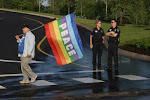
The schedule planned was ambitious and diverse. Meetings were scheduled with the Minneapolis Mayor and City Council, two days at different locations on the University of MN campus – both St. Paul and both banks of the Minneapolis campus, a boat trip on Lake Minnetonka, a cook-out/barbeque, the Mall of America, a tour of the State Capitol, some went to a battered woman’s shelter, others to The Loft literary center, a private and a public school, an alternative lifestyle community in Wisconsin as well as a tour of an Amish farm in Lanesboro. Some went to the Como Zoo, others appeared on Almanac and Belahdan, two locally produced TV shows. There was an Arab Cultural Night at a local church as well as the dedication of a new peace bridge at a Minneapolis park. A Tour of the Walker Art Center and Sculpture Garden was included as well as a tour of Native American artifacts at the Minneapolis Institute of Arts led by curator Joe Horse Capture. The folks at Meet Minneapolis, a group promoting visits and tourism in the Twin Cities sponsored and led a bus tour of both cities where I saw sights I’d never seen in my 20 years here.
Augsburg College, the Eastside Food Coop, the Chamber of Commerce, and MN Advocates for Human Rights were also on the schedule. But the stop which seemed most important on the agenda was the meeting with Congressman Keith Ellison. Spending an hour and a half with them, the 5th District Congressman not only listened and took notes but also asked one of his staff members to take video of the dialog so their message could get wider exposure. Delegates explained their concern about Chapter 7 of the United Nations which has placed restrictions on what ultimate control Iraqis can assume in their own nation while under American occupation. They spoke passionately about their need and desire for Iraqi control over the rebuilding of their infrastructure and control over their resources, especially oil and water.
Because of the weakness of the Iraqi government under the sanctions and now the occupation, the neighboring countries of Turkey, Syria, and Iran have diverted water from the Tigris and Euphrates Rivers which are essential for both drinking water and agriculture in Iraq. Although Iraq should have abundant wealth due to their oil reserves, delegates complained they have little say over rebuilding projects under the occupation and decried the “brain drain” which has occurred during the past 19 years under sanctions and war. Many of the highly trained people needed to run hospitals, schools and universities, repair infrastructure like roads, bridges, electrical plants, and water treatment facilities have been killed, uprooted as refugees, or fled the country during this period. Some expressed they felt the brain drain was a deliberate strategy to keep Iraq politically and economically weak.
One of the delegates was forthright about the more recent repression of women in Iraq who had enjoyed many more freedoms and status than they experience now. I could see the discomfort of some of the other delegates, especially those aligned with the dominate political party in power today in Iraq, at hearing this delegate expound on the plight of women today. It gave me a brief insight (despite my lack of Arabic) into some of the diversity included in this delegation.
It was evident that Congressman Ellison was engaged and energized by this meeting. He responded positively to the invitation for him to visit Najaf on his next visit to Iraq and he said he’d work with the State Department to facilitate that. The greatest spoken desire of the delegates during the two weeks was for concrete, specific, tangible commitments to partnership and help in rebuilding their city and country. Now that we are “sisters”, they would say, you need to help us while we are in need.
But their visit was not one of demands but one of pleading. Over and over we were reminded that this war had destroyed and devastated their nation and we had a moral and legal obligation to restore it – but the message was conveyed not out of anger but of expectation. They knew Americans to be a generous and compassionate people, distinct from its government; hoping that the military tanks and weapons could be quickly replaced with skilled professionals with resources under the direction of and with the cooperation of Iraqi leadership.
I’d like to share a few other observations. My only previous exposure to Iraq was a two week presence in Baghdad and Basra just three months before the war at the end of 2002. Baghdad, even under Saddam was more culturally diverse (dare one say more “liberal” in some respects?) than Najaf which has been a cultural center and Holy City for the Shi’a branch of Islam. In Baghdad, on the streets, there were many women who walked around without head coverings or at least less modest dress than you would have found in Shi’a dominated areas. Because Saddam Hussein’s regime gave preference and power to minority Sunni Muslims under his Baathist rule, most Shi’a were glad to see the U.S. intervention to topple his government.
But that replacement of a dictator came at a fearful price with the breakdown of the society and structures in its aftermath coupled with the incompetence of the occupation to either provide order or any quality reconstruction. These Iraqis witnessed the incredible waste of U.S. tax dollars in bribes, corruption, and incompetence – leaving them physically much worse off than under Saddam’s repression. At least before they had reliable electricity and somewhat potable drinking water. Now without working sewer systems, the water contamination issues are huge. A delegate told me she routinely has only 6 hours of electricity today – and it has been that way for going on six years now! So the welcome toppling of Saddam has been bittersweet with one type of oppression replacing the other. Even so, some delegates expressed reluctance to the idea of U.S. troops pulling out – fearing that in its present weak state (militarily), other nations might take advantage of them. It was a perspective I hadn’t considered.
One of the delegates with his PhD in nuclear physics told us he was one of only 16 left in the whole country, down from 350 before the war. The others have been “assassinated”, killed, or fled the country. He talked numerous times when he had the chance to educate others about the use of depleted uranium in Iraq during both the 1991 war as well as the present war. He explained about both the heavy metal toxicity as well as the radioactive contamination caused when the pyrophoric shells release the water-soluble uranium trioxides which pollute the ground water and the non-soluble uranium dioxide particles which lay on the ground and get distributed during the frequent dust storms, scattering these microscopic radioactive particles far and wide. I couldn’t help but think of the Biblical passage of “reaping the whirlwind” when he talked about the problems caused by depleted uranium use. He described the frightening rise in cancers and birth defects in Iraq since these weapons were used and the medical doctors along on the delegation confirmed the scientist’s conclusion about the causal effect likely between these and exposure to the depleted uranium.
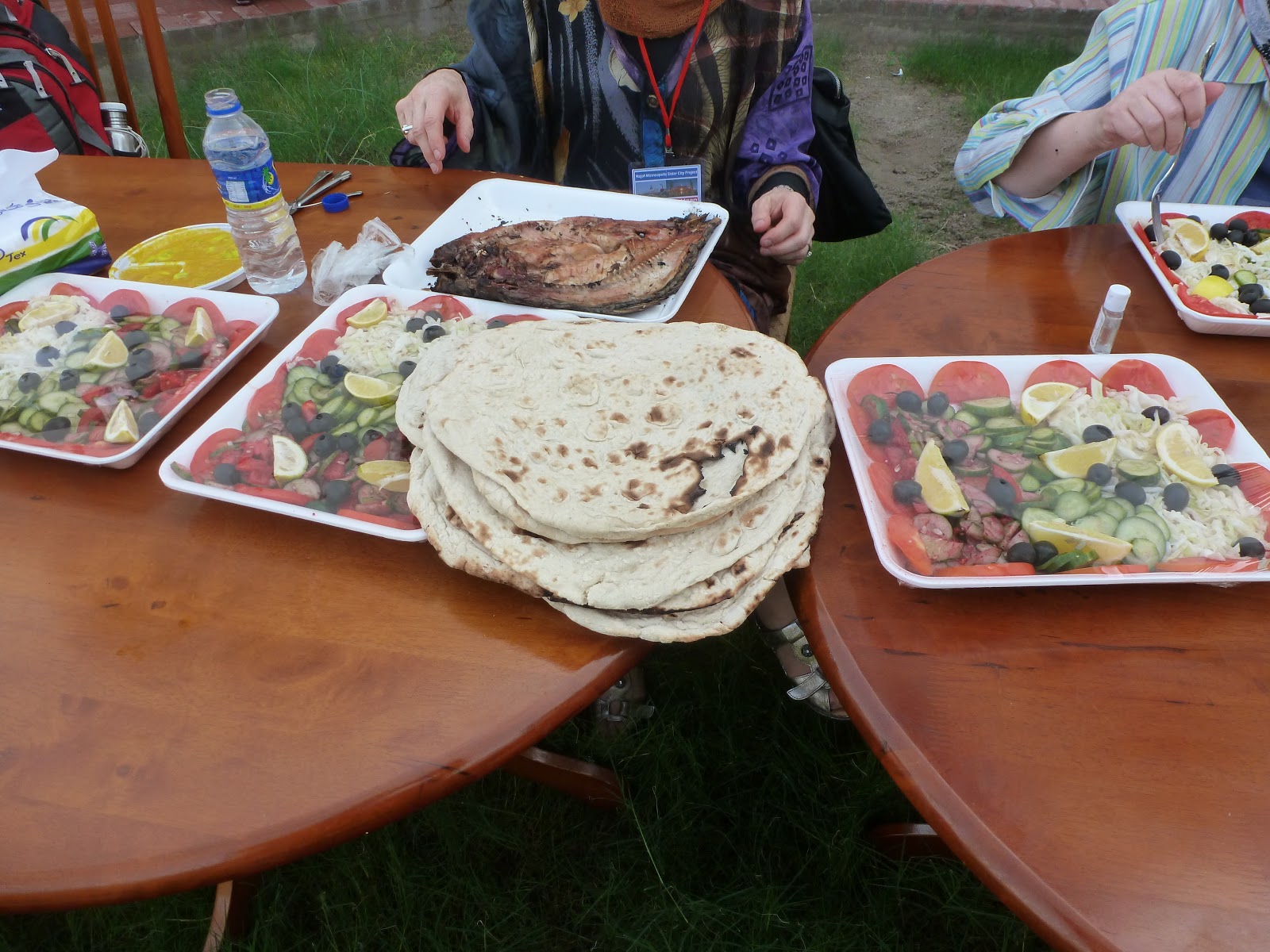
We faced cultural and religious differences we hadn’t anticipated. We knew that most of the delegates would prefer halal meat and asked our host families to provide it if they were including meat in any of their meals. But we assumed that many of the restaurants we planned to go to which served Middle Eastern foods would also have halal meat – some did, others didn’t. We knew use of alcohol was also forbidden for them and sought to avoid eating places that promoted it but, again, didn’t realize the strong feelings of some in the group that if a restaurant served any alcohol, it “contaminated” the rest of the food. Fortunately, in the process we found some excellent restaurants that served both halal dishes and no alcohol. I would have loved to listen in on the conversations which must have ensued by the trip to the Mall of America – to both the culture of excess as well as the marketing of sexuality at places like Victorias Secret or Fredricks of Hollywood. I have my doubts about how soon one might find such stores in Najaf.
In selecting host families, we requested that there be no dogs and no pork products in the homes. Special plastic pitchers were purchased for sanitary reasons in the home bathrooms. Our over-booked schedules frequently did not provide adequate time or places for delegates to have for their prayers but we adjusted on the fly. I’m sure some guests at the Como Zoo might have been surprised to see two men in suits, barefooted, bowing and kneeling in prayer near the sea lion exhibit! Others seemed content to pray in less conspicuous fashion. I’m sure we’ll hear stories of cultural faux pas over the coming weeks from our host families.
There were times when the Iraqis talked rapidly among themselves, their voices raising and seemingly the conversations heated up. But not knowing what they were discussing, I couldn’t tell if there were sharp disagreements or whether it was merely a culturally different way of communicating than I’m used to in this country.
We had two “farewell” dinners, the original scheduled in advance when we thought the return flight to Najaf would be on Friday, October 2 and the second when we discovered the travel agent in Najaf had booked the return flights for the 3rd. At the first farewell, we were joined by host families and planning team members, packed into a cozy space at St. Martin’s Table. It was wonderful to see the bonds that had developed between Twin Citians and our guests. Appreciations flowed, hugs and hand shakes were exchanged, bridges were crossed and barriers were dismantled. It was in incarnational event for The Iraqi and American Reconciliation Project. It is only a beginning. There is much hard work that must continue.
But a few of us were blessed with a second farewell dinner the following evening, this time at the Hamdi Restaurant in Midtown. I took the opportunity to tell the delegates that they had told us they wanted to return to Iraq with tangible commitments. My “gift” to them, I explained with the help of Sami Rasouli translating, was my arrest that very morning at Alliant Techsystems for trespass when I refused to leave after asking to meet with the weapons maker CEO, wanting to ask him to stop making and selling depleted uranium munitions. I told my new friends that my arrest was a tangible sign to them that I will continue to work, nonviolently, on their behalf (and on behalf of the whole world) to stop the use of these deadly weapons.
One of the doctors in the group pulled me aside and told me how sad he was that I was risking going to jail. I’m sure he knew some who had been jailed under Saddam’s regime. I tried to explain to him a little of the history of civil disobedience and how going to jail can help build the movement. While as a doctor he desperately wants the scourge of depleted uranium contamination to end, he also does not want to see his new friend suffer. We need each other to create a world that is better for both of us. The visit from our new “sisters” is a first step on that journey. Some may remember Najaf several years ago was home to one of the fiercest insurgent groups, the Madhi Army, led by Muqtada al-Sadr. When we see the face of one who may have been an “enemy”, when we sit down and break bread together and listen to one another, we can recognize our common humanity and strive to become friends. I give thanks for their courage to visit the nation that attacked them.
[More on The Iraqi & American Reconciliation Project can be found at: www.reconciliationproject.org ]